Healthy Insole Q&A
Suitable for all shoes, no custom orders required, easy to use
Comfortable and natural, easy to clean, stable and healthy.
Q: Why should we wear healthy insoles?
A: Foot symptoms often arise from fatigue of the foot muscles and tendons, leading to poor posture and even problems like lumbar muscle strain.
Q: What are the benefits of wearing healthy insoles?
A: Insoles can strengthen the foot base, help the body stay stable, and make walking and standing for long periods of time easier and less strenuous.
Q: What type of shoes are healthy insoles suitable for?
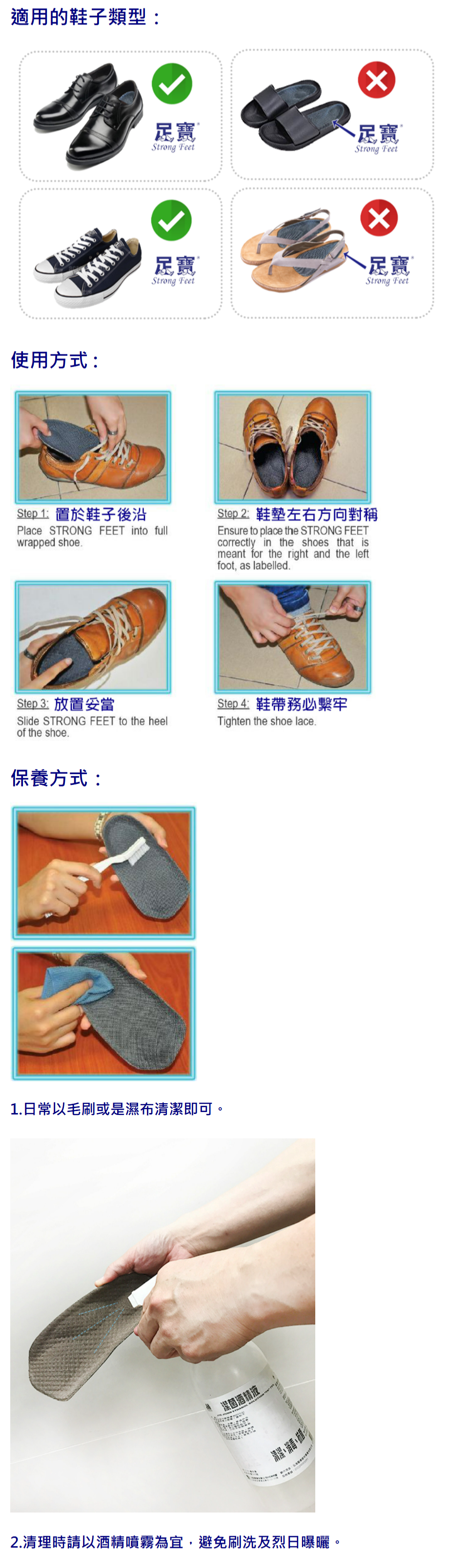
A: Suitable for any type of shoe, but not for high heels, sandals, or slippers.
Q: Do I need to buy shoes one size larger to wear health insoles?
A: Shoes that fit your feet normally are fine; there's no need to go up a size.
Q: How long can a pair of healthy insoles be worn? Will they deform?
A: The warranty is usually one year. As long as the insoles are used properly and are in good condition, they won't get damaged or deformed. Insoles that don't easily deform can maintain good foot shape and posture.
It meets the requirements of being economical, durable, and environmentally friendly.
Q: Can healthy insoles cure diseases?
A: Health insoles, through their special design, can improve poor posture, correct gait behavior, improve muscle coordination, relieve limb soreness, and reduce sports injuries. They are not suitable for pathological treatments.
Therefore, it is advisable to consult a professional physician for pathological symptoms.
Q: Why are health insoles only half the size of the foot, instead of covering the entire foot?
A: The main function of healthy insoles is to provide support and maintain good, flexible movement.
Q: At what age can children wear this? Does it help them grow taller?
A: Generally, the foot and ankle structures of a six-year-old child are mature enough that the Foot Treasure can help correct their posture during growth. The special design of the Foot Treasure is to stimulate the reflex zones on the soles of the feet, which may have a beneficial effect on growing teenagers.
Q: How to use healthy insoles at home?
A: Most people wear indoor slippers or go barefoot at home or indoors, whether at home, working, or going up and down stairs. Because the ankles do not have good support, the foot base becomes loose and the support is unbalanced. Or the reaction force generated by a hard ground can cause the joints of the limbs to not "return to their original position", resulting in biomechanical symptoms such as collapsed arches, plantar fasciitis, calluses, or limb pain.
It is recommended to choose indoor closed shoes, kung fu shoes, or non-slip socks and then put them in healthy insoles.
Q: Most people choose shoes based on their softness and comfort, so why are some health-conscious insoles particularly hard?
A: Most shoes feature soft pads or air cushions as their selling point, aiming to attract consumers with the "comfort" of the soles of their feet upon immediate contact. However, they neglect the fact that the important foundation supporting the human body is more likely to cause ankle instability and accelerate joint wear when the feet are placed on soft pads.
Healthy insoles use special materials to firmly support the body, achieving the effects of rebound propulsion, shock absorption, pressure distribution stability, and comfort.
Q: What does it mean if I feel a slight discomfort or soreness in the soles of my feet after wearing health insoles?
A: This sensation is most noticeable in people with misaligned left and right arches, flat feet, or high arches. It is a positive reaction to correct the muscles and ligaments pulled by the limbs. It lasts for several tens of minutes or hours until it fits the feet. There are no side effects, so there is no need to worry too much. Long-term use is beneficial and harmless.
Q: What sports are Strong Feet health insoles used for?
A: Healthy insoles are suitable for any fixed-point or shifting movement (except swimming) and physical labor. However, brisk walking is the safest and healthiest form of exercise; regular and consistent brisk walking helps improve cardiovascular function.
Q: Who are healthy insoles suitable for?
A:
1. People who stand for long periods of time, walk for long periods of time, brisk walkers, joggers, and athletes.
2. Individuals with unstable foot and ankle joints. This applies to athletes and professionals who require ankle stability.
3. People with flat feet, high arches, plantar fasciitis, forefoot pain, or calluses.
4. Individuals with biomechanical symptoms resulting from poor posture, as well as any occupational or athletic group.
Q: How do I choose the right healthy insoles that fit my foot size?
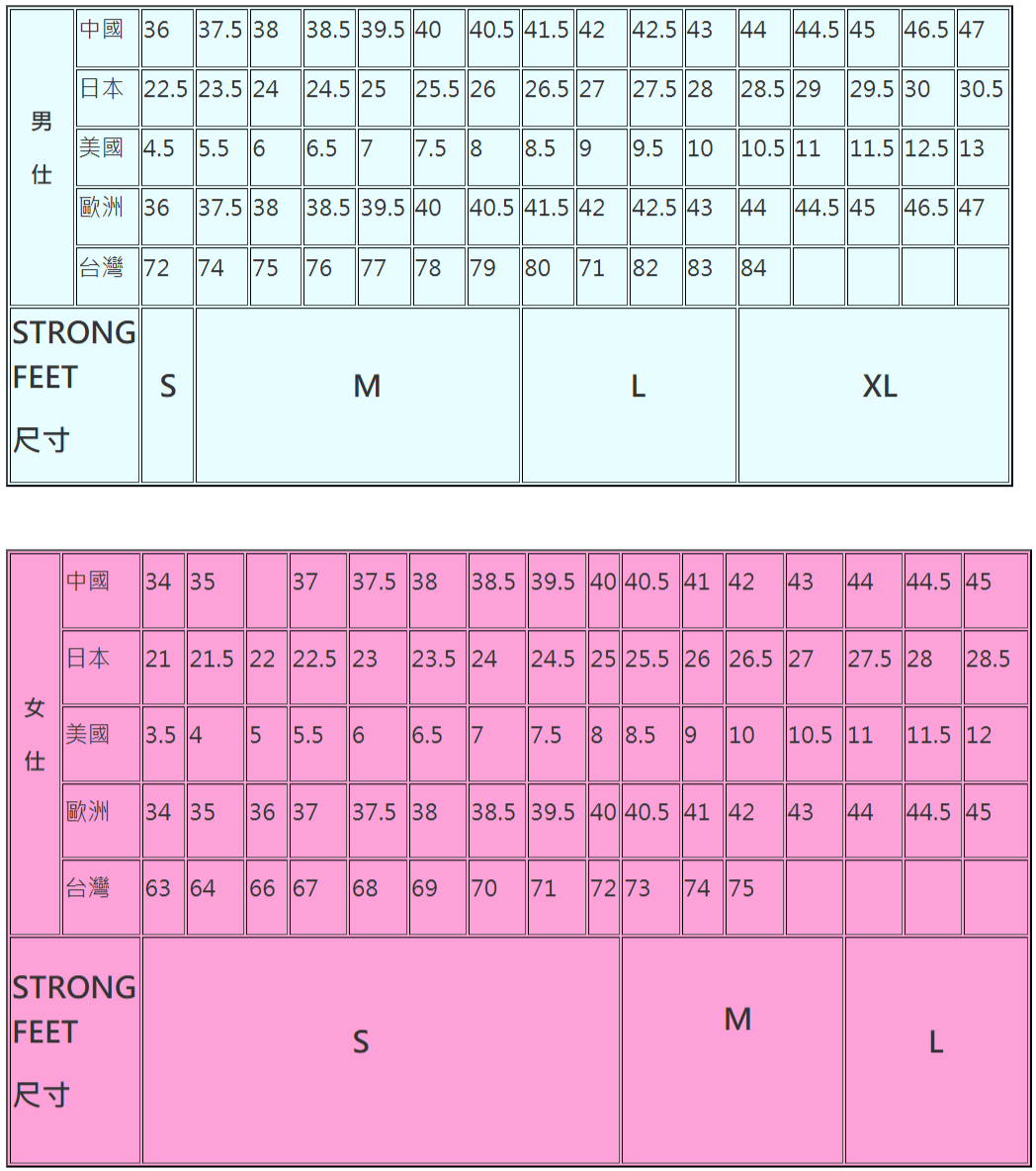
A: Strong Feet health insoles come in five sizes. Most Asian women have slender feet, and 90% of them should choose size S.
Choose a healthy insole that fits your shoe size:
Q: How do I maintain healthy shoe insoles? Can they be washed?
A: Healthy insoles are easy to clean. Simply rinse with water, gently brush with a soft brush, or spray with alcohol and let air dry. Avoid exposure to direct sunlight.
Q: How to use and maintain it?